


Buying a Listed Property: The Things You Need to Know
A practical guide to purchasing, renovating and extending a listed home in the Cotswolds and beyond.
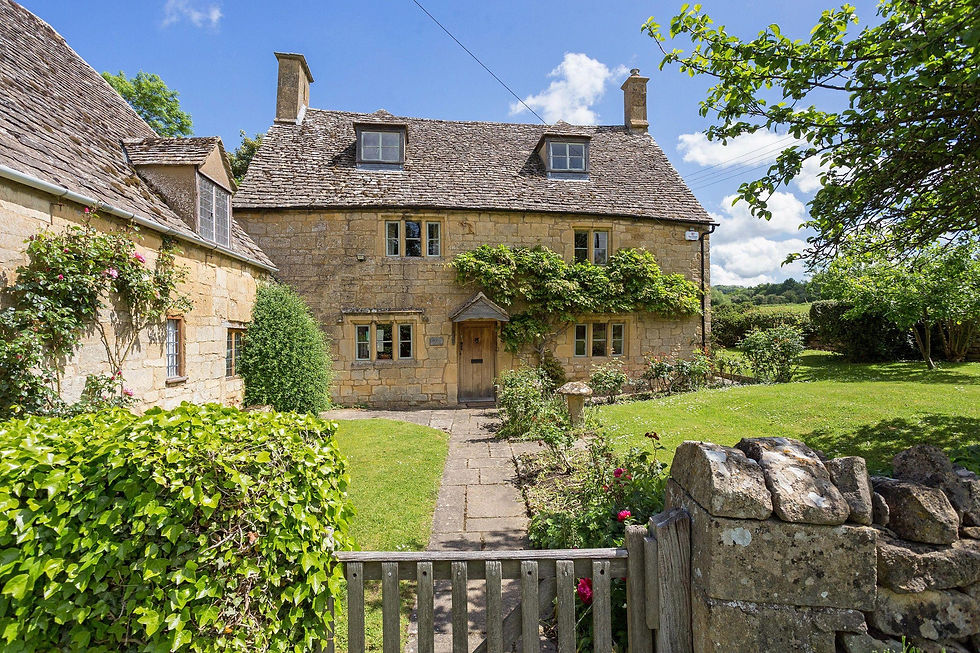
There is something undeniably special about owning a historic home. From the honey-coloured stone cottages of the Cotswolds to Georgian townhouses and centuries-old farmhouses, listed properties offer architectural character, craftsmanship and a sense of history that modern buildings can rarely replicate.
However, buying a listed property comes with responsibilities that many purchasers don't fully appreciate until they begin planning alterations.
That charming cottage with its exposed oak beams, original fireplaces and traditional stonework might seem like the perfect renovation opportunity. But what happens when you want to extend the kitchen, replace the windows, remove an internal wall or improve the insulation?
The reality is that owning a listed building is very different from owning a conventional home.
Before committing to a purchase, it is important to understand what you are buying, what alterations may be possible and what responsibilities come with maintaining a historic building.
At Accolade Architecture, we believe that understanding a property's potential and limitations before purchasing can help avoid expensive surprises later.
Here are the key things every prospective listed-property owner should consider.
1. Understand what it means when a property is listed
The first thing to establish is exactly what protection applies to the property.
In England, listed buildings are designated because of their special architectural or historic interest.
There are three principal grades:
Grade I – Exceptional Interest
Buildings of exceptional architectural or historic interest. These represent a relatively small proportion of listed buildings and are subject to particularly careful consideration when alterations are proposed.
Grade II – Particularly Important Buildings*
Buildings of more than special interest, often containing significant architectural features or historical importance.
Grade II – Special Interest
The most common category, covering a wide variety of historic homes, cottages, farmhouses and other buildings.
A common misconception is that Grade II listing only protects the exterior of a property.
This is incorrect.
Unless a listing expressly excludes particular elements, protection generally applies to the entire building, including its interior, regardless of whether individual features are mentioned in the listing description. Historic England
What should you do before buying?
Search for the property on the National Heritage List for England.
This will help you establish its listing grade, official description and historical significance.
However, remember that the listing description is not necessarily a complete record of every protected feature.

2. Don't assume you can extend the property
One of the biggest mistakes purchasers make is assuming that because a property has a large garden or an obvious space for an extension, planning permission will be straightforward.
Imagine finding a beautiful two-bedroom Cotswold cottage.
It has a generous garden, attractive views and enough space for a contemporary kitchen extension.
You purchase the property with the intention of transforming it into a larger family home.
Only afterwards do you discover that the proposed extension would significantly affect the historic character of the building and is unlikely to receive the necessary consent.
This can completely change the financial and practical viability of the purchase.
Before buying, consider:
Could the property accommodate an extension?
Would the extension affect historically significant features?
Could a contemporary extension be appropriate?
Would a traditional design be more suitable?
Could existing outbuildings be converted instead?
Would additional bedrooms be possible?
Are there restrictions affecting the garden or surrounding land?
Being listed does not automatically mean a property cannot be extended.
However, the acceptability of an extension depends on its impact on the building's significance, character and setting.
Early discussions with the local authority's conservation officer can help establish which approaches may be appropriate. Historic England
Accolade's advice
Before purchasing a listed property with plans for substantial alterations, consider commissioning an initial architectural feasibility assessment.
Understanding the opportunities and constraints before committing to the purchase can be considerably less expensive than discovering them afterwards.
3. Check whether previous alterations were approved
This is one of the most important checks when purchasing a listed building.
Over the years, previous owners may have undertaken alterations such as:
Removing internal walls
Replacing original windows
Installing modern doors
Removing fireplaces
Altering staircases
Converting loft spaces
Constructing extensions
Changing roofing materials
Replacing traditional plaster
Installing rooflights
Some of these works may have required Listed Building Consent.
The fact that an alteration was completed years ago does not necessarily mean it was authorised.
Unauthorised works to a listed building can create significant legal and financial complications.
A local authority may require unauthorised alterations to be remedied or reversed, and the responsibility for addressing them can affect a subsequent owner.
Carrying out works requiring Listed Building Consent without obtaining it is also a criminal offence. Somerset Council
What should you do?
Ask your solicitor to investigate the property's planning and Listed Building Consent history.
Compare previous approvals with the building as it exists today.
If you notice significant alterations, request evidence that the appropriate consents were obtained.
Where records are unclear, seek specialist legal and conservation advice before exchanging contracts.
Never assume that an existing extension or alteration is lawful simply because it has been there for years.
4. Understand the difference between planning permission and Listed Building Consent
Many first-time listed-property buyers are unfamiliar with the different permissions required.
Planning permission and Listed Building Consent are separate legal processes.
Planning Permission
Planning permission considers whether a proposed development is acceptable in planning terms.
Relevant considerations may include:
Size and scale
Appearance
Neighbouring properties
Landscape impact
Local planning policies
Heritage considerations
Listed Building Consent
Listed Building Consent considers the impact of proposed works on the building's special architectural or historic interest.
It may be required for alterations affecting the character of the building, including internal changes that would not ordinarily require planning permission.
For example, removing an internal historic wall might not require planning permission but could require Listed Building Consent.
Similarly, a proposed extension may require both permissions.
There is currently no application fee for Listed Building Consent itself in England, although professional advice, drawings, surveys and supporting reports can involve costs. Historic England
Our advice
Before purchasing, establish whether your proposed alterations are likely to require planning permission, Listed Building Consent or both.
Where significant works are planned, professional advice at an early stage can help identify potential obstacles.

5. Understand how traditional buildings actually work
Historic buildings were often constructed using methods and materials that behave very differently from modern construction.
Many traditional Cotswold properties incorporate:
Solid stone walls
Lime mortar
Lime plaster
Timber floors
Oak framing
Stone slate roofs
Traditional roof structures
Permeable building materials
These materials often manage moisture by allowing it to move through and evaporate from the building fabric.
Introducing inappropriate modern materials can interfere with this process.
For example, using impermeable cement-based finishes on traditional masonry may contribute to trapped moisture and deterioration.
Similarly, adding insulation without considering how an existing wall manages moisture can create problems that were not present before.
Why does this matter when buying?
A recently renovated property may look immaculate while concealing inappropriate repairs.
Fresh plaster, modern paint and newly installed flooring can sometimes hide underlying moisture problems.
When viewing a traditional property, ask:
Has the building been repaired sympathetically, or have modern materials been used without considering the original construction?
Understanding the existing building fabric is essential before deciding how to renovate or improve it. Historic England
6. Be careful when assessing damp
Damp is a common concern in older properties, but diagnosing its cause is not always straightforward.
Traditional buildings can experience moisture problems for several reasons, including:
Defective gutters
Leaking roofs
High external ground levels
Poor drainage
Inappropriate cement render
Impermeable internal finishes
Inadequate ventilation
Plumbing leaks
Condensation
Not every damp patch means that an expensive damp-proofing system is required.
In fact, inappropriate treatments can sometimes make matters worse.
Before purchasing
Consider appointing a surveyor experienced in historic and traditional buildings.
They should understand how older buildings manage moisture and be able to distinguish between defects requiring repair and issues associated with inappropriate previous alterations.
A standard mortgage valuation is not a substitute for a detailed building survey.
For a listed property, a specialist building survey can be particularly valuable. Historic England
7. Budget for specialist repairs and maintenance
Owning a listed building can involve higher maintenance costs than owning a modern property.
Traditional materials and construction techniques may require specialist contractors and craftspeople.
For example:
Stonework
Historic masonry may require carefully selected replacement stone and appropriate lime mortar.
Roofing
Traditional stone slate roofs can be expensive to repair, particularly where matching materials or specialist workmanship are required.
Windows
Original timber windows may need careful repair rather than straightforward replacement.
Plasterwork
Lime plaster repairs may require specialist knowledge and different drying times from modern gypsum plaster.
Timber
Historic timber structures may require careful investigation and conservation-led repair.
The financial consideration
A property that appears affordable at the purchase stage may require substantial expenditure on maintenance and repairs.
Before buying, consider obtaining preliminary estimates for significant defects.
The purchase price is only one part of the cost of owning a historic home.
8. Check whether you can improve the property's energy efficiency
Traditional properties are often associated with:
Poor insulation
Draughts
Single glazing
Higher heating costs
Inefficient heating systems
Naturally, many purchasers want to improve their home's comfort and energy performance.
However, listed buildings require a more considered approach.
Replacing original windows with standard double-glazed units, installing external insulation or introducing modern ventilation systems may affect historically significant fabric.
Some alterations may require Listed Building Consent.
This does not mean historic buildings cannot be made more energy-efficient.
Appropriate improvements might include draught-proofing, sensitive window upgrades, suitable insulation, heating improvements and carefully designed ventilation.
The important thing is to assess the building as a whole and understand how proposed changes could affect its fabric.
Historic England's guidance supports carefully considered energy improvements that protect the significance and performance of historic buildings. Historic England
Before purchasing
Ask yourself whether the property's existing energy performance is acceptable and whether the improvements you consider essential are likely to be achievable.
9. Don't overlook the garden, outbuildings and boundary walls
A listed property's protection may extend beyond the main house.
Historic outbuildings, garden structures and boundary walls can sometimes be protected either through their own listing or because they fall within the curtilage of the listed building.
Certain structures within the curtilage that pre-date 1 July 1948 may be treated as part of the listed building.
The exact position depends on the building's history, physical relationship and legal circumstances. Historic England
This is particularly relevant when buying:
Farmhouses
Country houses
Cotswold cottages
Properties with barns
Houses with historic garden walls
Rural properties with detached outbuildings
Why is this important?
You might assume that an old garage could easily become a home office or guest accommodation.
However, its historic relationship with the main property could introduce additional restrictions.
Before purchasing, establish whether any outbuildings or landscape features are protected and whether your proposed alterations are realistic.
10. Consider whether the property can accommodate modern family life
Historic houses were rarely designed around the way we live today.
Small kitchens, disconnected rooms, low ceilings and limited storage may contribute to their charm, but they can also create practical challenges.
Before buying, consider whether the existing layout can realistically support your lifestyle.
Ask yourself:
Is the kitchen large enough?
Could internal rooms be connected?
Is there sufficient natural light?
Could additional bathrooms be installed?
Is there space for a home office?
Can the property accommodate modern services?
Could accessibility be improved?
Is there enough storage?
Would an extension be essential?
Some improvements may be relatively straightforward.
Others could involve significant alterations to protected historic fabric.
An important consideration
Don't buy a historic property assuming you can completely redesign its interior.
Part of its architectural significance may lie in its original layout, internal walls, staircases and historic features.
A good architectural assessment can help establish where change may be possible and where preservation should take priority.
11. Investigate the roof, structure and foundations
Historic buildings can contain construction methods that are unfamiliar to contractors experienced primarily in modern housing.
Potential concerns include:
Historic timber decay
Roof movement
Inadequate previous structural alterations
Settlement
Cracking
Defective masonry
Previous repairs
Inappropriate alterations to load-bearing walls
Not every crack indicates a serious structural problem.
However, understanding the cause is important.
Where significant structural concerns exist, a structural engineer experienced in historic buildings may be required.
Before buying
Commission an appropriate building survey and investigate any significant defects before committing to the purchase.
Where necessary, seek specialist structural advice and obtain preliminary repair estimates.
12. Check insurance and mortgage requirements
Listed buildings can require specialist insurance arrangements.
The cost of reinstating a historic property following major damage may be considerably higher than rebuilding a conventional modern home.
Specialist materials, traditional construction methods and conservation requirements can all influence reinstatement costs.
Historic England recommends considering specialist insurance advice and obtaining an appropriate reinstatement valuation. Historic England
Before purchasing, investigate:
Whether suitable buildings insurance is available
The likely annual premium
Reinstatement costs
Policy exclusions
Requirements relating to maintenance
Cover during renovation works
Any mortgage lender conditions
Obtaining insurance quotations before exchanging contracts can help avoid unexpected costs.
13. Understand that renovation costs may be higher than expected
Renovating a listed building is not necessarily more expensive in every situation.
However, the combination of specialist workmanship, traditional materials, additional surveys and conservation requirements can increase costs.
For example, replacing a modern window and repairing a historic timber sash window may involve very different processes.
Similarly, repairing traditional stonework can require significantly more specialist input than conventional masonry repairs.
Additional costs may include:
Measured building surveys
Architectural drawings
Heritage statements
Conservation advice
Structural investigations
Specialist contractors
Traditional materials
Additional design coordination
It is also important to understand that listed status does not automatically provide a VAT exemption for building works. VAT treatment depends on the particular work and applicable tax rules. Gov.uk
Accolade's approach
We believe architectural ambition should be developed alongside a realistic understanding of construction costs.
For historic buildings, early consideration of the existing fabric, likely repairs and proposed alterations can help establish a more informed project budget.
14. Check the planning history before making an offer
If you are purchasing a listed property with the intention of extending or substantially renovating it, investigating its planning history is particularly valuable.
Previous applications may reveal:
Earlier extension proposals
Refused applications
Conservation officer comments
Historic alterations
Approved drawings
Planning conditions
Previous heritage assessments
A refused planning application does not automatically mean a different proposal would also be refused.
However, the reasons for refusal may identify important constraints.
For example, a previous application may have been refused because the proposed extension was considered too large or harmful to the building's historic character.
Understanding these concerns before developing a new proposal can help inform a more appropriate design.
15. Don't assume contemporary architecture is impossible
One of the most common questions we encounter when considering traditional properties is:
"Can we add a contemporary extension to a listed building?"
The answer is that contemporary extensions can be possible, but each proposal must be considered individually.
A successful design does not necessarily need to imitate the original architecture.
In some circumstances, a clearly contemporary intervention can provide an appropriate relationship between old and new.
The important considerations include:
Scale
Proportion
Materials
Historic significance
Architectural character
The building's setting
The impact on existing fabric
A carefully designed contemporary extension can improve the functionality of a historic home while allowing the original architecture to remain clearly identifiable.
However, there is no guarantee that a particular design approach will receive consent.
The best starting point is understanding the historic building before deciding what the extension should look like.
16. Speak to an architect before buying
For many purchasers, the biggest risk isn't necessarily the condition of the building.
It's purchasing a property based on assumptions about what can be changed.
You may have found a beautiful Cotswold cottage with the perfect location and garden.
But perhaps your plans depend on:
Adding two bedrooms
Creating a large kitchen extension
Converting an outbuilding
Opening up the ground floor
Installing larger windows
Improving access to the garden
If these alterations are essential to making the property work for your family, understanding their feasibility before purchasing is extremely important.
An initial architectural assessment can help identify potential design opportunities, planning constraints and areas requiring further investigation.
It cannot guarantee planning permission or Listed Building Consent, but it can provide a more informed basis for your purchasing decision.
Our pre-purchase checklist for listed properties
Before exchanging contracts, we recommend investigating the following:
Consideration | What to check |
Listed status | Confirm the listing grade and official description. |
Historic significance | Identify important architectural features and historic fabric. |
Planning history | Review previous applications, approvals and refusals. |
Unauthorised works | Confirm previous alterations received the necessary consents. |
Extension potential | Assess whether the property could accommodate your proposed alterations. |
Internal alterations | Establish whether important walls, openings or features could be affected. |
Building condition | Commission a survey appropriate for a historic property. |
Traditional materials | Investigate whether previous repairs used suitable construction methods. |
Damp and moisture | Identify causes rather than relying on superficial treatments. |
Roof and structure | Investigate significant defects and potential repair costs. |
Energy efficiency | Consider whether appropriate improvements are achievable. |
Outbuildings | Check whether barns, garages and boundary structures are protected. |
Construction budget | Allow for specialist materials, workmanship and unforeseen repairs. |
Insurance | Obtain suitable cover and confirm reinstatement requirements. |
Professional advice | Consult an architect, solicitor and appropriately experienced surveyor before committing. |
Is buying a listed property worth it?
Absolutely — for the right purchaser and the right property, owning a listed building can be an incredibly rewarding experience.
Historic homes offer something that cannot easily be recreated: individuality, craftsmanship, history and a connection to their surroundings.
However, purchasing one requires a different mindset.
Rather than seeing the property simply as something to renovate, it is important to understand what makes it special and how it can be adapted without compromising those qualities.
The most successful projects often come from finding the right balance between preservation and contemporary living.
The aim shouldn't be to make an old building behave exactly like a new one. It should be to make the most of what already exists while carefully introducing what modern life requires.
Thinking of buying a listed property in the Cotswolds?
At Accolade Architecture, we understand the importance of combining contemporary design with an appreciation of traditional buildings, historic materials and sensitive architectural settings.
Whether you're considering a Cotswold cottage, historic farmhouse, period townhouse or listed country property, understanding its potential before purchasing can help you make a more informed decision.
We can help you explore:
Architectural Potential - Understanding how the property could be extended, renovated or reconfigured.
Planning Considerations - Identifying potential constraints associated with listed status, conservation areas and local planning policies.
Traditional Building Considerations - Reviewing the implications of historic construction methods, existing materials and proposed alterations.
Concept Design - Exploring initial architectural ideas to help visualise what the property could become.
Budget-Led Design - Considering design ambitions alongside the practical realities of construction.
Before you buy it, understand what it could become.
Speak to Accolade Architecture about your property before committing to purchase.

Comments